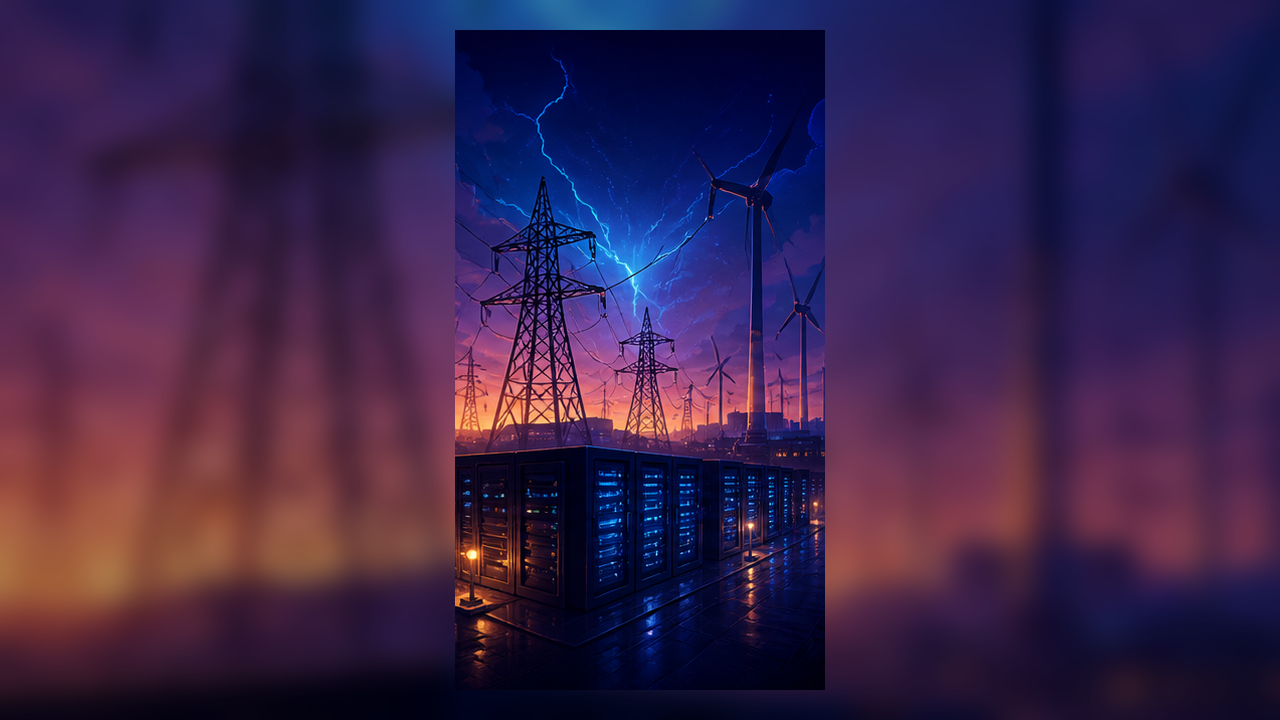
The AI infrastructure boom is often summarized with a chip shipment number or a new model release. A more useful view is to follow the physical system underneath: data centers, networking, cooling, electricity contracts, and the capital needed to build them. Recent reporting estimates that major technology companies have already spent more than a trillion dollars on AI infrastructure since 2023, with another large wave expected during 2026.
Why power changes the economics
A model can be improved in software, but a data center still needs a reliable electrical connection and a way to remove heat. When projects cluster in the same region, the limiting factor can become grid interconnection rather than server procurement. That creates longer lead times and raises the value of efficiency improvements that reduce energy per inference.
The cost is not only an operator's problem. Utilities may need new substations and transmission, communities may debate water use and land use, and regulators may decide how infrastructure investment is recovered. A project can be commercially attractive while still creating a public planning challenge.
Efficiency is a product feature
The industry is responding with better accelerators, model quantization, workload scheduling, liquid cooling, and smaller models for routine tasks. These changes matter because not every request needs a frontier model. Routing simple classification or summarization to a smaller system can reduce latency and energy use without affecting the user experience.
For investors and enterprise buyers, headline spending is not enough. The better questions are utilization, power availability, cooling design, software efficiency, and the percentage of workloads that generate revenue. AI infrastructure is becoming a utility-like business; its returns will depend on operating discipline as much as on model capability.