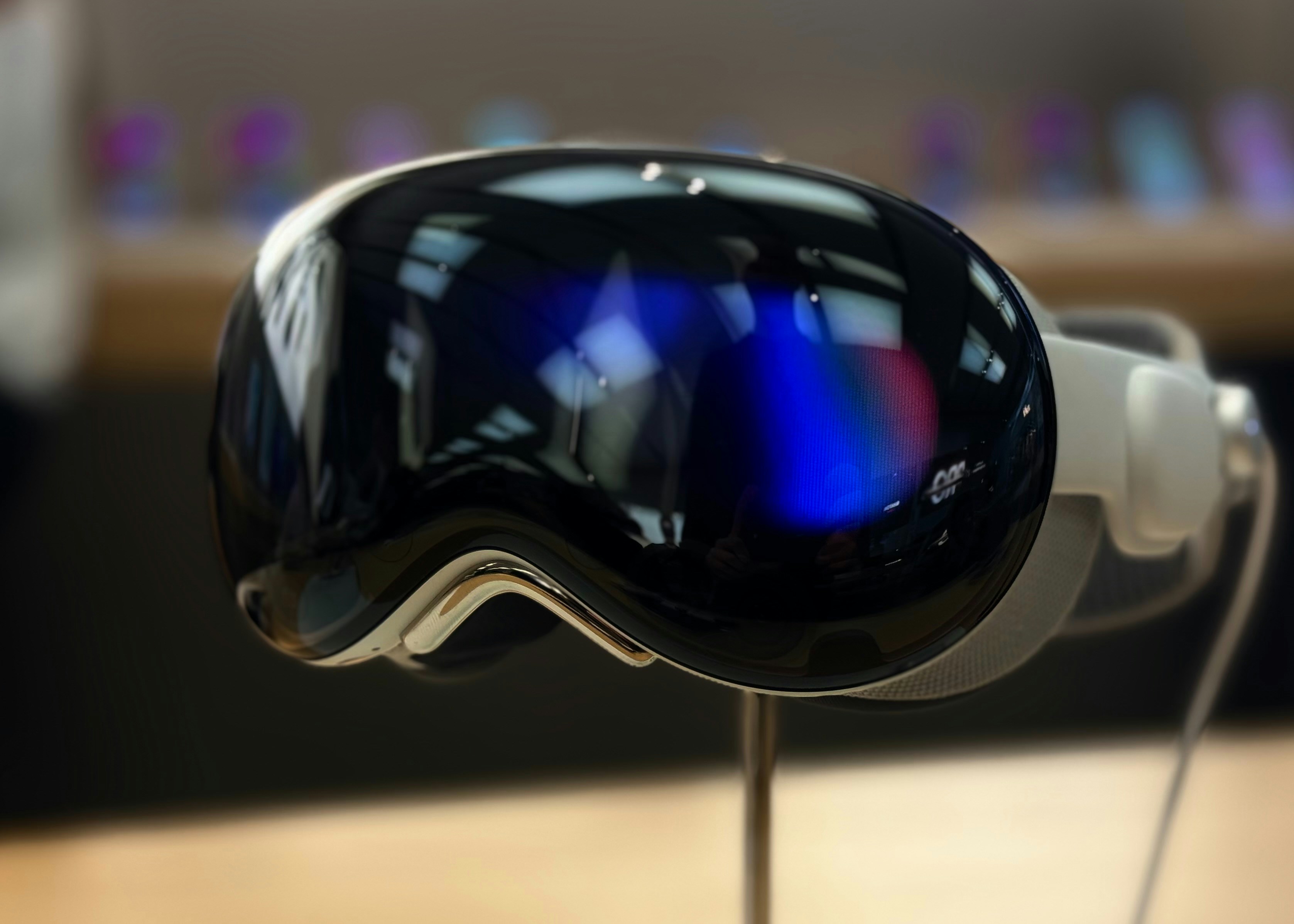
Apple's Vision Pro headset, initially viewed by many as a niche product for developers and early adopters, is finding a surprisingly strong and rapidly growing market in enterprise environments. While consumer adoption has been modest, businesses across manufacturing, healthcare, architecture, education, and professional services are integrating spatial computing into their daily operations at a pace that has exceeded even Apple's internal projections.
Unexpected Market
When Apple launched the Vision Pro in early 2024 at a price of $3,499, initial sales were modest by the company's standards — approximately 600,000 units in the first year, compared to the millions of iPhones and iPads Apple sells in their first quarters. Many analysts declared the product a disappointment and questioned Apple's spatial computing strategy.
However, a remarkable shift occurred in the second year. As developers created enterprise-focused applications and early adopters demonstrated practical business use cases, corporate purchasing departments began placing substantial orders. Boeing purchased over 5,000 units for use in aircraft manufacturing and maintenance training. Kaiser Permanente acquired 3,000 units for surgical planning and medical education. General Motors deployed 4,000 headsets across its design and engineering teams.
Manufacturing companies now represent the largest enterprise segment for Vision Pro. Equipment repair guidance has emerged as a killer application: a technician wearing a Vision Pro can see step-by-step repair instructions overlaid onto the physical equipment, with animations showing exactly which components to remove and in what order. Remote experts can see exactly what the technician sees, drawing annotations that appear in the technician's field of view. Boeing reports that Vision Pro-assisted repairs are 35% faster on average, with a 50% reduction in errors compared to traditional methods.
Architectural firms have adopted Vision Pro for immersive building walkthroughs. Rather than viewing 3D models on a flat screen, architects and clients can walk through life-sized virtual buildings, experiencing spatial relationships and material choices in a way that 2D renderings cannot convey. Firms like Foster + Partners, Gensler, and Zaha Hadid Architects have integrated Vision Pro into their design review workflows, reporting significant improvements in client satisfaction and design iteration speed.
Medical schools and teaching hospitals are among the most enthusiastic enterprise adopters. The Cleveland Clinic uses Vision Pro for anatomy education, allowing students to explore detailed 3D anatomical models that can be manipulated, rotated, and dissected virtually. Surgeons at Johns Hopkins use the device for surgical planning, importing patient CT and MRI scans as 3D models that can be studied from any angle before entering the operating room.
visionOS 3 Update
Apple's latest visionOS 3 update, released alongside the second-generation Vision Pro hardware, brings significant improvements that further enhance enterprise utility. Hand tracking has been substantially improved, with latency reduced from 40 milliseconds to under 15 milliseconds and tracking accuracy improved in low-light conditions. This makes interactions feel more natural and reduces user fatigue during extended sessions.
Support for multiple virtual displays has been a game-changer for knowledge workers. Users can now position up to four virtual Mac displays in their physical space, creating a workstation that would require thousands of dollars of physical monitors. These virtual displays appear at sharp enough resolution for text-heavy work including coding, writing, and data analysis.
Enhanced Mac integration allows the Vision Pro to function as a seamless extension of a Mac workstation. Users can drag windows from their physical Mac display into the virtual environment, and applications running on the Mac can render their 3D content directly into the spatial computing environment. This hybrid workflow is particularly valuable for creative professionals who need access to Mac applications alongside spatial computing tools.
The visionOS 3 enterprise management framework allows IT departments to deploy, configure, and manage headsets at scale using existing mobile device management infrastructure. This includes support for single-app mode (locking the device to a specific enterprise application), configuration profiles, and integration with corporate identity systems. These capabilities were developed in direct response to feedback from early enterprise adopters.
Developer Ecosystem
The visionOS app ecosystem continues to grow, with over 8,000 native applications now available — up from 2,000 at the end of the first year. Major enterprise software companies have made significant investments in the platform. SAP has released Vision Pro applications for supply chain visualization and enterprise data analytics. Salesforce offers a spatial CRM interface that displays customer data in 3D. Adobe has brought its creative suite to visionOS, with Photoshop, Illustrator, and Premiere Pro all supporting spatial computing workflows.
Professional services firms are also investing in the platform. Consulting firms like McKinsey and Deloitte have developed Vision Pro applications for data visualization, strategy workshops, and client presentations. Law firms are exploring spatial computing for courtroom presentations and evidence visualization.
The developer tools have matured considerably. visionOS 3 introduces Reality Composer Pro, a professional-grade tool for creating complex 3D scenes and interactive experiences. SwiftUI has been extended with native support for spatial interfaces, making it easier for existing iOS developers to create visionOS applications without learning entirely new programming paradigms.
Competitive Landscape
Apple's primary competitors in the spatial computing space are Meta with the Quest Pro and Quest 4 headsets, and Microsoft with the HoloLens 3. Meta has focused primarily on the consumer and gaming market, while Microsoft has targeted enterprise use cases with its industrial metaverse platform.
Vision Pro's competitive advantages include significantly higher resolution displays (over 23 million pixels), more advanced hand tracking that does not require controllers, seamless integration with the Apple ecosystem, and a more polished user experience. Meta's advantages include a lower price point (Quest 4 starts at $999) and a larger entertainment content library.
In the enterprise segment, Vision Pro is gaining share due to its superior display quality and integration with existing Mac-based enterprise workflows. However, Microsoft's HoloLens retains advantages in industrial environments that require ruggedized hardware and specialized sensors for manufacturing applications.
Future Outlook
Industry analysts project that Apple will release a lower-cost version of the Vision Pro in 2027 or 2028, potentially priced under $2,000. This lower-cost model is expected to maintain the same display quality while using less expensive materials, a simplified manufacturing process, and potentially a tethered connection to an iPhone or Mac for processing power. Such a device would significantly expand the addressable market and could accelerate enterprise adoption by an order of magnitude.
The enterprise traction that the Vision Pro has achieved represents a genuine validation of spatial computing as a practical technology rather than merely a science experiment. While the consumer market for augmented and virtual reality remains elusive, the professional applications are clear and growing. Vision Pro has demonstrated that spatial computing has genuine utility in training, design, collaboration, healthcare, and manufacturing — and that utility is driving real investment from organizations that see tangible returns.