The Autonomous Driving Landscape in Mid-2026
The autonomous driving industry in 2026 presents a starkly polarized landscape. On one end, Waymo has expanded its fully driverless commercial operations to cover 600 square miles across multiple cities. On the other, most automakers continue to refine Level 2+ driver-assist systems while carefully managing expectations about when—or if—full self-driving will arrive. The divergence in approaches, timelines, and underlying technologies reveals an industry still searching for the optimal path to vehicle autonomy.
Waymo: The Commercial Leader
Waymo, now operating under Alphabet's broader AI strategy, has established itself as the clear leader in operational autonomous driving. The company's sixth-generation Waymo Driver platform, deployed across a fleet of 3,200 modified Zeekr and Jaguar I-Pace vehicles, now provides paid robotaxi service in San Francisco, Los Angeles, Phoenix, Austin, and Miami. In April 2026, Waymo announced that its fleet had surpassed 10 million fully driverless miles, with a safety incident rate 85% lower than human-driven vehicles for equivalent trips.
The technology underpinning Waymo's advantage is its sensor suite. The sixth-generation system integrates five proprietary 360-degree lidar units, six radar modules, and 29 cameras, creating an overlapping sensor coverage that eliminates blind spots. This redundancy is critical for the company's safety case: no single sensor failure can result in a loss of perception capability.
Waymo's mapping approach also distinguishes it from competitors. Rather than relying exclusively on on-the-fly perception, Waymo maintains high-definition 3D maps of every road within its operating area, updated daily through a combination of fleet data collection and manual verification. This approach provides an enormous competitive moat—mapping new cities requires months of preparation and regulatory negotiation.
However, concerns remain about unit economics. Each Waymo vehicle's sensor suite costs an estimated $60,000 to $80,000, even with Zeekr's optimized vehicle integration. The company has not disclosed profitability per trip, but analysts estimate that current fares of approximately $2.50 per mile barely cover vehicle costs, let alone the massive R&D and operational expenses of the support infrastructure.
Cruise: Rebuilding After Setback
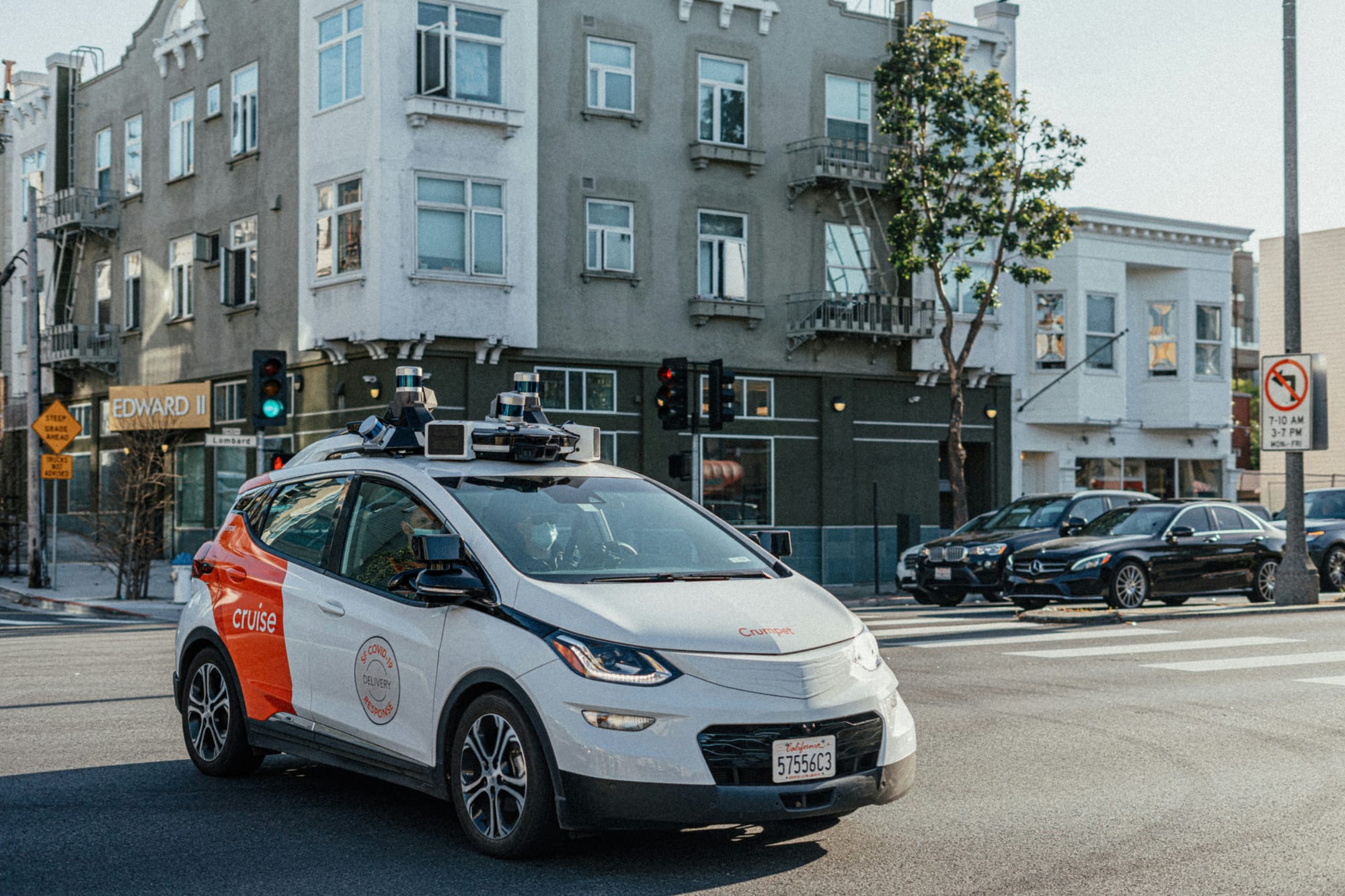
Cruise, the General Motors subsidiary, is emerging from a difficult period marked by the 2023 accident in which a pedestrian was dragged by a Cruise vehicle in San Francisco. The company now operates under new CEO Marc Whitten and a restructured safety organization that reports directly to GM's board of directors.
In Q1 2026, Cruise resumed commercial operations in Dubai and Dallas with a significantly reduced fleet of just 300 vehicles. The company's new approach emphasizes "slow and safe" expansion: each new city requires six months of supervised testing before driverless operations can begin. The Cruise Origin, a purpose-built autonomous vehicle without a steering wheel, received National Highway Traffic Safety Administration approval for limited deployment in closed-campus environments.
Cruise's technical approach has shifted as well. The company abandoned its earlier bespoke all-in-one sensor architecture in favor of an updated modular system using hardware from Valeo and Luminar, combined with GM's Ultra Cruise software stack. This hybrid approach reduces sensor costs by about 40% compared to the previous generation, though it also sacrifices some of the sensor overlap that made Cruise's earlier system highly redundant.
GM has signaled that Cruise is in "prove it" mode, with CFO Paul Jacobson stating that the company expects Cruise to achieve positive unit contribution margins by Q2 2027. Failure to reach this milestone could trigger a strategic review of GM's autonomous driving investment, though a full divestiture remains unlikely given GM's long-term ambition to be a mobility platform company rather than a traditional automaker.
Tesla: Data Advantage, Regulatory Hurdles
Tesla's approach to autonomous driving remains the most controversial in the industry. The company's Full Self-Driving system, now at version 13.2 in wide release and version 14.0 in limited beta, has accumulated over 3 billion miles of data through its shadow-mode collection system. This data advantage is unmatched in the industry—no other company comes close to Tesla's training dataset size.
FSD v13.2 represents a meaningful improvement over previous versions. The system uses an end-to-end neural network architecture where camera inputs flow directly through a single deep neural network to produce driving outputs, rather than relying on hand-coded rules for behavior planning. This architecture has allowed rapid iteration: each v13.x sub-version has improved intervention rates by approximately 20% over the previous release.
Independent testing by engineering firm AMCI found that FSD v13.2.5 achieved an average of 187 miles between disengagements on mixed highway and urban routes, a significant improvement over the 75 miles achieved with v12.5. However, the system still exhibits failures in edge cases such as unprotected left turns across multiple lanes of traffic, construction zones with atypical lane markings, and unusual weather conditions.
The fundamental question surrounding Tesla's camera-only approach remains unsolved. Without lidar, the system cannot directly measure depth, instead relying on learned depth estimation from monocular and stereo camera inputs. This approach works well in the vast majority of situations but creates known failure modes in low-contrast conditions, heavy fog, and when encountering vehicles or obstacles with unusual shapes that are underrepresented in the training data.
Regulatory approval for unsupervised operation remains elusive. Tesla has applied for driverless testing permits in both California and Texas, but neither application has been approved as of mid-2026. The National Transportation Safety Board has expressed concerns about Tesla's safety validation methodology, particularly the company's reliance on fleet-wide shadow-mode data rather than structured, scenario-based testing with known coverage metrics.
BYD: The New Challenger
BYD's autonomous driving ambitions represent the most recent and potentially most disruptive entry to this competitive landscape. The company's Xuanji A3 chip, launched in May 2026, provides 512 TOPS of dedicated neural network processing capability, and BYD has announced plans to offer Level 2+ ADAS as standard equipment across its entire lineup by 2027.
BYD's strategy differs from its competitors in that it does not pursue a robotaxi business model. Instead, the company sees autonomous driving technology primarily as a feature that sells vehicles—a differentiator in the hyper-competitive Chinese market where hardware margins are razor thin. This approach allows BYD to amortize development costs across millions of vehicles rather than requiring each autonomous mile to generate revenue.
The company's data strategy is also unique. Rather than relying exclusively on its own test fleet, BYD leverages its entire connected vehicle fleet for shadow-mode data collection. With approximately 2.5 million of its vehicles currently connected and uploading anonymized driving data, BYD's training dataset is second only to Tesla's in total volume.
The Convergence Question
The industry increasingly recognizes that autonomous driving may not arrive as a single breakthrough but as an evolution across different operational domains. Highway autonomy (Level 3) is achievable today with existing hardware and has been deployed by Mercedes-Benz and Honda in limited markets. Urban autonomy (Level 4) is operational but limited to geofenced areas with extensive mapping. Vehicle-to-everything (V2X) communication, combined with improved highway infrastructure, could accelerate the path toward higher levels of autonomy.
The ultimate question for the industry is whether the massive investments—estimated at over $80 billion collectively over the past decade—will yield corresponding returns. The cautious consensus emerging in mid-2026 is that autonomous driving will transform transportation, but on a longer timeline and through a narrower set of applications than the industry predicted in the more optimistic years of 2019 to 2021.