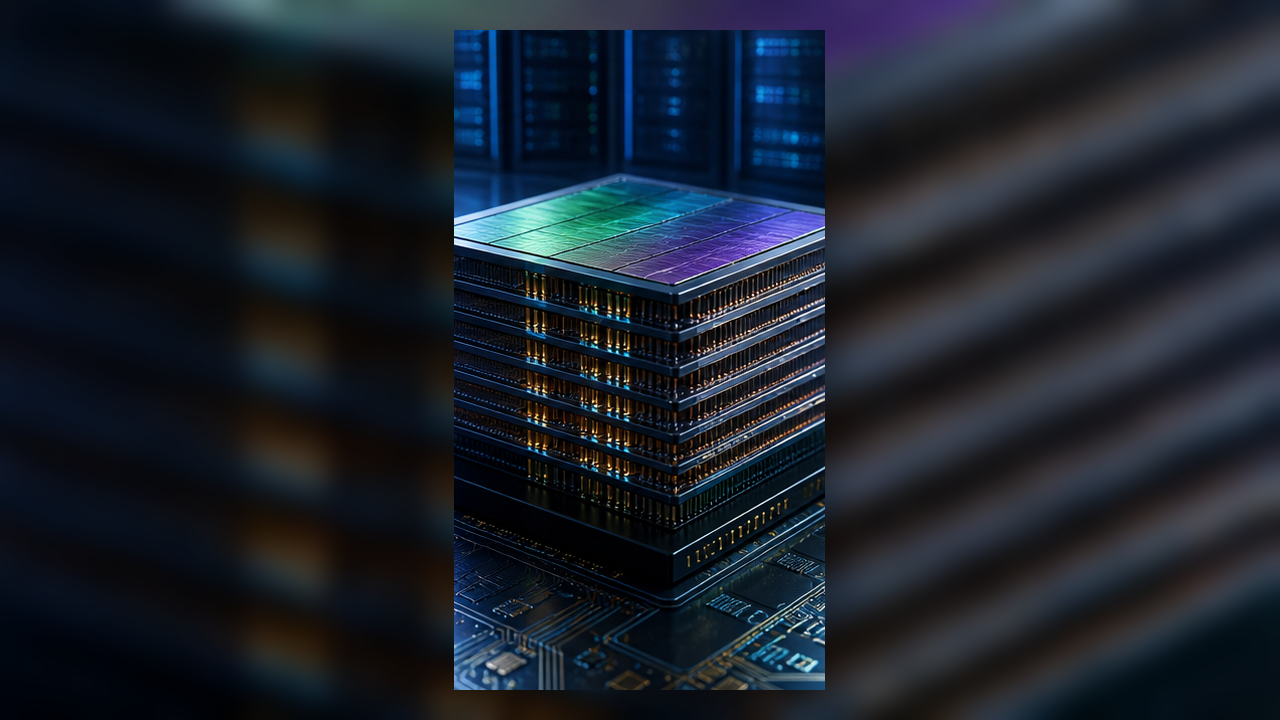
AI accelerators spend much of their time moving data. High-bandwidth memory (HBM) addresses that problem by placing stacked memory close to the compute package, increasing the amount of data that can move between memory and processor. It has become one of the defining components of modern AI infrastructure—and a constraint that is easy to miss when attention is focused on GPUs.
Bandwidth is a system property
An accelerator cannot use theoretical compute performance if memory cannot feed it. The useful result depends on the model, batch size, precision, interconnect, software kernels, and thermal envelope. Adding more HBM can improve capacity and bandwidth, but it also adds cost, power, and packaging complexity.
This makes memory planning part of product design from the beginning. A chip team, a memory supplier, and a packaging partner must coordinate roadmaps months or years before a product reaches a data center. A late change in stack size can affect the substrate, cooling, and software configuration.
What buyers should measure
Procurement teams should compare performance per dollar and per watt on the workloads they actually run, not only the memory bandwidth on a specification sheet. They should also ask about supply commitments and the availability of the complete accelerator package. A large allocation of compute dies is not useful if HBM or packaging is unavailable.
The next stage of AI hardware will be shaped by system integration. Memory suppliers have strategic influence because the best model-serving economics increasingly depend on how efficiently data moves.