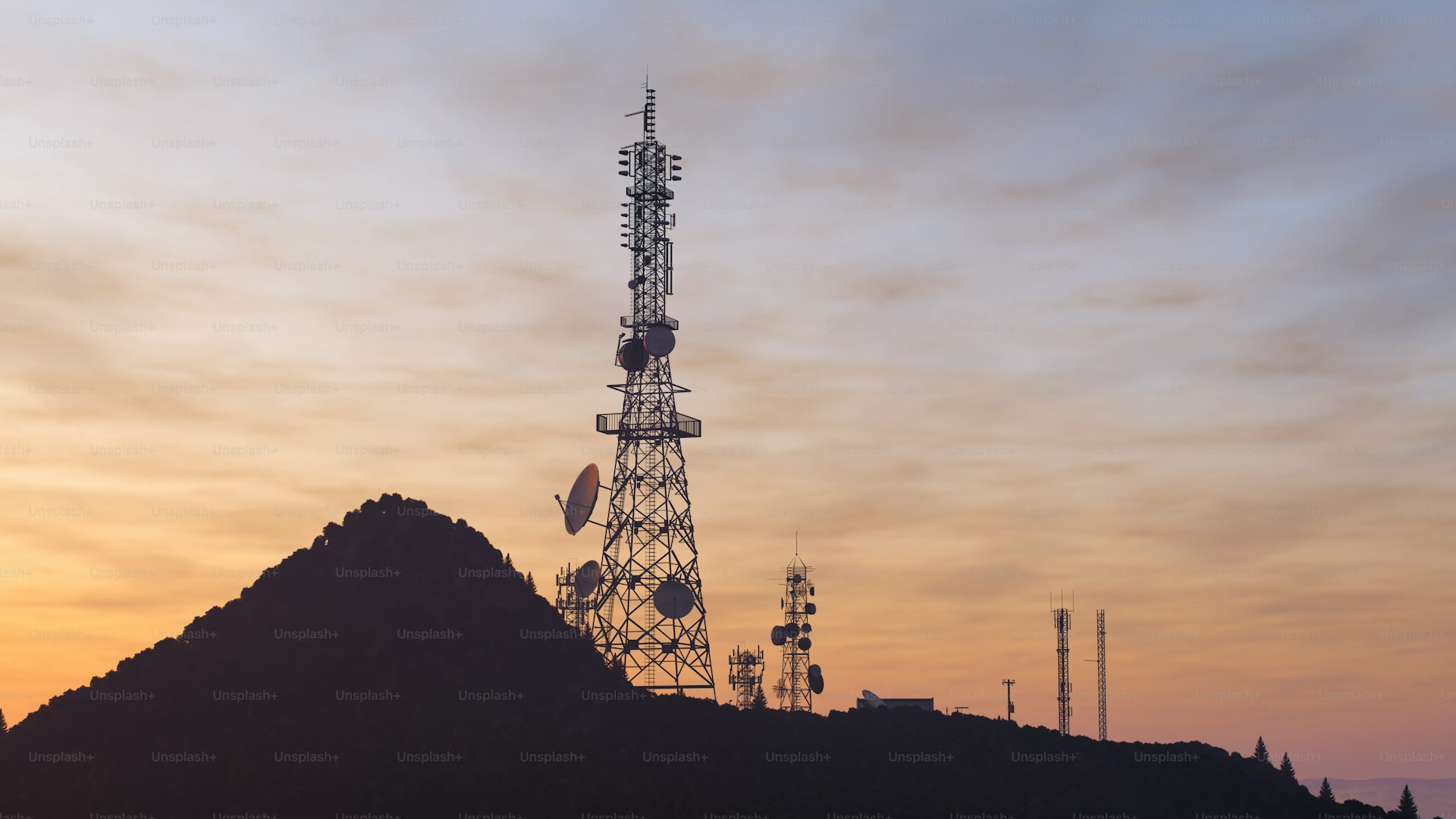
The Next Evolution of Connectivity
While much of the industry narrative has shifted to 6G research and speculation, Huawei has been quietly executing a massive deployment of 5G-Advanced — also known as 5.5G — across China and partner markets worldwide. 5.5G represents the evolutionary upgrade between 5G and 6G, delivering tenfold improvements over the first generation of 5G in three key dimensions: data speeds, latency, and connection density. For Huawei, 5.5G is not a laboratory curiosity but a commercial reality, with deployments live in over 50 Chinese cities and expanding rapidly.
What 5.5G Delivers
The 5G-Advanced standard, defined in 3GPP Release 18 and enhanced in Release 19, introduces several key technical advances that distinguish it from baseline 5G. The most immediately perceptible improvement is in downlink speeds. While early 5G networks typically deliver 300-800 Mbps to end users, 5.5G targets peak user-experienced data rates of 5 Gbps — a five to tenfold improvement. This is achieved through carrier aggregation of up to 200 MHz of spectrum in sub-6 GHz bands combined with millimeter wave spectrum where available, massive MIMO configurations with up to 128 antenna elements, and advanced modulation schemes including 256-QAM on the uplink.
Uplink performance receives particular attention in 5.5G. Traditional cellular networks have always been asymmetric — optimized for downloading, not uploading. But the rise of video live streaming, cloud gaming, user-generated content, and real-time AI applications demands symmetrical performance. 5.5G introduces uplink enhancement techniques including dedicated uplink carrier aggregation and reduced latency scheduling that can deliver uplink speeds of up to 1 Gbps. For content creators and livestreamers, this means broadcasting 4K video from a mobile device without compression artifacts or buffering.
Latency targets for 5.5G are equally ambitious. The standard targets 1 millisecond over-the-air latency for ultra-reliable low-latency communications (URLLC) scenarios, down from the 5-10 milliseconds typical of current 5G networks. This is achieved through improved scheduling algorithms, preemptive transmission, and mini-slot configurations that allow data to be transmitted in smaller time units. For applications like remote surgery, autonomous vehicle coordination, and industrial robotic control, this level of latency performance is genuinely transformative.
Passive IoT and Sensing
One of the most innovative features of 5.5G is the integration of passive IoT capabilities. Traditional IoT devices require batteries or wired power, limiting deployment scenarios. 5.5G's passive IoT mode uses energy harvesting from radio signals to power tags that cost under $0.10 each and have unlimited operational life. These tags can be embedded in shipping pallets, retail inventory, agricultural monitoring, and infrastructure inspection, enabling connectivity at a scale previously impossible.
Huawei has demonstrated passive IoT systems deployed in a warehouse environment tracking 50,000 tagged items simultaneously with a single base station. The tags transmit temperature, humidity, and vibration data alongside identification information, enabling comprehensive supply chain monitoring. Retail applications include automated inventory counting — a store shelf equipped with a passive IoT reader can count every item in under 10 seconds, compared to hours of manual labor.
5.5G also introduces integrated sensing and communication (ISAC) capabilities. The same radio signals used for data transmission can be analyzed for their reflection characteristics, enabling radar-like sensing of the environment. This allows base stations to detect the position, velocity, and even the micro-movements of objects and people within coverage. Privacy-preserving implementations process sensing data locally and only transmit aggregated, anonymized information. Applications include smart building occupancy monitoring, gesture-based device control, and safety systems that can detect falls or unusual movements in elderly care facilities.
Huawei's Radio Equipment Lineup
Huawei's MetaAAU (Active Antenna Unit) is the hardware foundation of 5.5G deployments. The MetaAAU integrates antenna elements, radio frequency processing, and baseband processing into a single compact unit that can be deployed on existing cell tower infrastructure. The key innovation is the use of extremely large aperture arrays (ELAA) technology, which increases the number of antenna elements per unit area. A single MetaAAU supports up to 192 antenna elements in a form factor similar to traditional 64-element massive MIMO units, providing significant beamforming gain without increasing deployment footprint.
Power efficiency has been a major design focus. The MetaAAU uses gallium nitride (GaN) power amplifiers that deliver approximately 30% better energy efficiency compared to the silicon LDMOS amplifiers used in earlier generations. Dynamic power management can shut down individual amplifier chains during low-traffic periods, reducing idle power consumption by approximately 50%. Huawei claims that a fully loaded 5.5G MetaAAU site consumes less power than an equivalent 4G LTE site while delivering more than 10 times the capacity.
Deployment Progress in China
China's three major carriers — China Mobile, China Unicom, and China Telecom — have all committed to 5.5G deployment, with Huawei as the primary infrastructure supplier. China Mobile alone has deployed MetaAAU units in over 30 major cities covering more than 200 million people. The commercial service was launched in Shanghai, Beijing, Shenzhen, and Hangzhou in early 2025, with expansion to an additional 50 cities by mid-2026.
Real-world performance measurements from Shanghai's 5.5G network show impressive results. Average downlink speeds measured during peak evening hours in the Lujiazui financial district exceed 2.5 Gbps, with peak speeds reaching 4.8 Gbps in optimal conditions. Uplink speeds consistently exceed 500 Mbps, enabling high-quality 4K livestreaming from any location within coverage. Latency measurements show 99th percentile round-trip times of under 4 milliseconds — responsive enough for competitive cloud gaming and real-time interactive applications.
Industrial and Enterprise Applications
Beyond consumer benefits, Huawei is positioning 5.5G as a foundational technology for Industry 4.0 and smart manufacturing. At the Baosteel manufacturing complex in Shanghai, a private 5.5G network connects over 10,000 sensors, cameras, and robotic systems across a 20-square-kilometer facility. The network provides deterministic latency — guaranteed maximum delays for safety-critical communications — that enables remote control of heavy machinery with millisecond-level precision. Quality inspection cameras stream 8K video to AI analysis systems that detect microscopic defects in steel production in real time, reducing scrap rates by approximately 12%.
Port automation is another promising application. At the Ningbo-Zhoushan Port, one of the world's busiest container ports, Huawei's 5.5G network supports 50 autonomous container trucks, 120 automated gantry cranes, and over 2,000 container tracking sensors operating simultaneously. The combination of deterministic low latency, high uplink bandwidth for camera feeds, and massive IoT connectivity for container tracking has increased port throughput by approximately 20% while reducing labor costs.
5.5G and HarmonyOS Synergy
The integration of 5.5G capabilities with HarmonyOS creates unique user experiences. The distributed soft bus in HarmonyOS can leverage 5.5G's low latency to make remote device interactions feel local. A MatePad Pro connected to a PC over 5.5G experiences display latency comparable to a wired connection, enabling wireless dual-monitor setups with no perceptible lag. Cloud gaming on HarmonyOS devices achieves console-like responsiveness when connected to 5.5G networks, with controller input-to-display latency under 10 milliseconds.
The networking-aware application framework in HarmonyOS allows developers to query network quality parameters and adapt their application behavior accordingly. A video calling app can adjust codec parameters based on real-time uplink capacity measurements. A navigation app can prefetch map data based on predicted bandwidth availability along the route. These capabilities demonstrate the potential of tight OS-network integration that neither Android nor iOS currently provides.
The 6G Horizon
Huawei is simultaneously investing heavily in 6G research, with a reported R&D budget of over $500 million dedicated to next-generation wireless technologies. The company expects 6G commercialization around 2030, with 5.5G serving as the bridge. Key 6G research areas include terahertz communications, reconfigurable intelligent surfaces, AI-native network architectures, and integrated terrestrial-satellite networks. However, for the remainder of this decade, 5.5G represents the cutting edge of commercially deployed wireless technology, and Huawei is firmly in the leadership position, having secured over 4,500 5G-Advanced standard essential patents — more than any other vendor.
Conclusion
Huawei's 5.5G leadership demonstrates that the company remains a formidable technology innovator despite sanctions constraints. The combination of MetaAAU hardware, advanced signal processing, and deep integration with HarmonyOS creates a vertically integrated connectivity ecosystem that competitors struggle to match. For consumers and enterprises in China, 5.5G is delivering measurable benefits today. For the global industry, it provides a preview of the capabilities that will eventually define 6G.