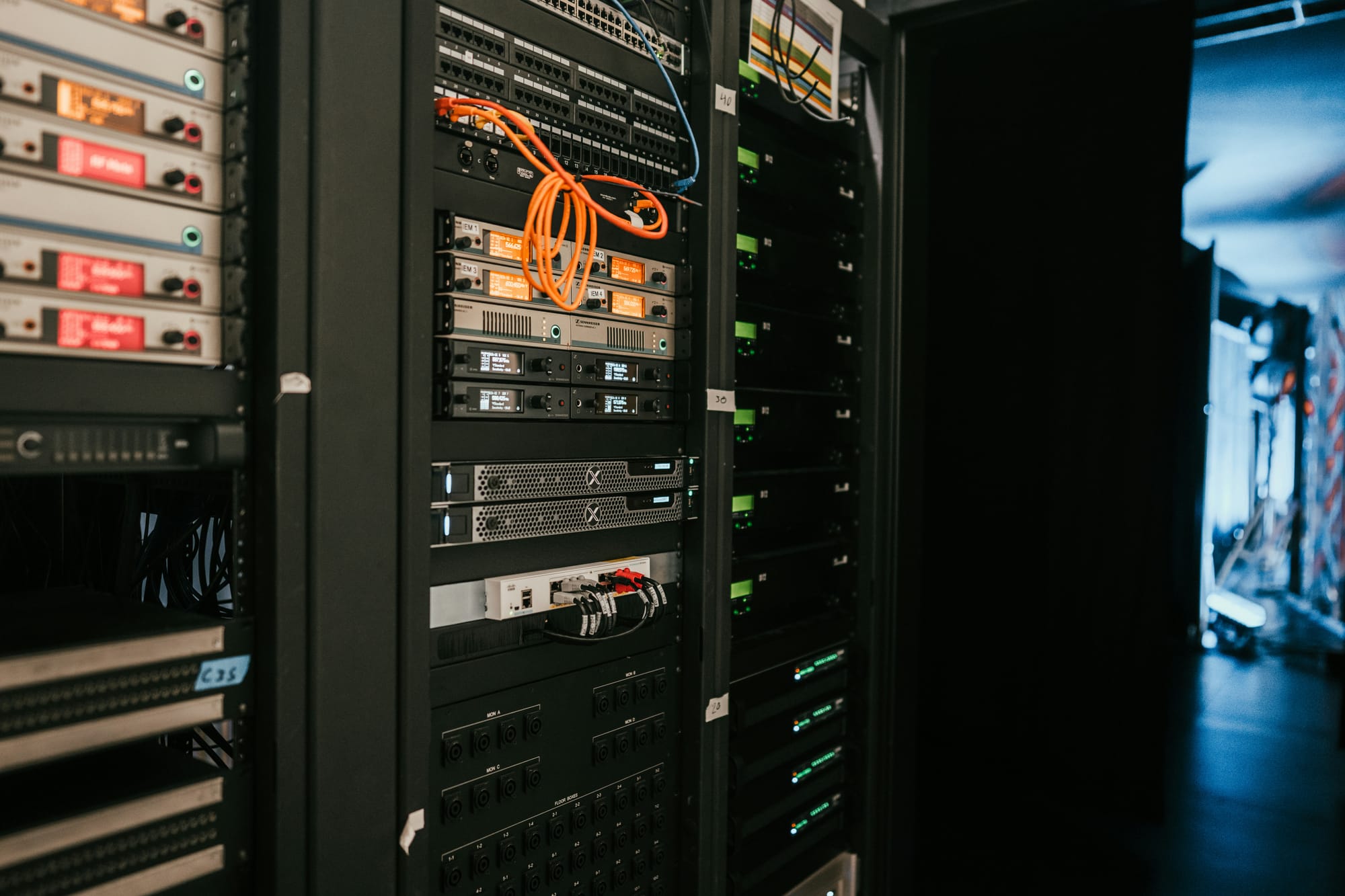
Building China's AI Infrastructure
Huawei has emerged as one of the most important players in the global AI infrastructure race, not through the consumer-facing chatbots that have captured public imagination, but through the foundational hardware and platform layers that power enterprise AI deployments. The company's AI strategy is built on three pillars: Ascend AI processors for hardware acceleration, the ModelArts platform for model development and deployment, and the Pangu series of foundation models targeting industry-specific applications. Together, these components form a comprehensive stack that competes directly with NVIDIA's CUDA ecosystem and AWS's SageMaker platform.
Ascend AI Processor Lineup
The Ascend series represents Huawei's answer to NVIDIA's data center GPUs. The current generation, Ascend 910B, is fabricated on a 7nm process and delivers 320 TFLOPS of FP16 performance with a thermal design power of 310 watts. This positions it competitively against the NVIDIA A100 in raw compute terms, though the software ecosystem remains less mature. The Ascend 910C, anticipated for late 2026, is rumored to use an enhanced manufacturing process and double the FP16 throughput to approximately 640 TFLOPS.
What distinguishes Ascend from competing AI accelerators is the Da Vinci architecture's native support for sparse computation. Many neural networks can be pruned to remove redundant connections without significant accuracy loss, and the Da Vinci hardware can skip zero-value operations automatically, providing up to 2x effective throughput gains for compatible models. The CUBE matrix computation unit delivers 4,096 FP16 MACs per cycle, while the Vector unit handles non-matrix operations efficiently.
The Cann Software Ecosystem
Huawei's Compute Architecture for Neural Networks (CANN) is the software layer that bridges Ascend hardware with popular AI frameworks. Version 7.0, released in early 2026, adds comprehensive support for dynamic shape computation — essential for large language model inference where input sequences vary in length. Operator coverage has expanded to over 1,500 optimized kernels, covering the majority of operations used in modern transformer architectures.
A critical development has been the growing compatibility with PyTorch through the torch_npu plugin. While early versions required manual code modification, the current plugin achieves near-transparent operation for most standard model architectures. The MindSpore framework, Huawei's own deep learning framework, offers native Ascend support and has gained adoption in Chinese research institutions where tight integration with Huawei's hardware is valued.
ModelArts: The Development Platform
ModelArts is Huawei Cloud's end-to-end machine learning platform, competing with SageMaker and Google's Vertex AI. The platform supports the full ML lifecycle from data labeling through model training, deployment, and monitoring. In 2026, ModelArts has added several noteworthy capabilities. The AutoML 2.0 system automatically performs neural architecture search and hyperparameter optimization, reducing the expertise required to train production-quality models. For a typical image classification task, AutoML 2.0 can discover architectures that match manually designed networks within 24 hours of automated search.
ModelArts now supports distributed training across up to 1,024 Ascend 910B accelerators with linear scaling efficiency exceeding 85%. This makes it feasible to train large models with hundreds of billions of parameters entirely on Huawei infrastructure, without reliance on NVIDIA hardware. The platform handles automatic gradient compression, model parallelism, and pipeline parallelism, abstracting away the complexity of distributed training configuration.
Pangu Foundation Models
The Pangu series of foundation models has expanded significantly. Originally covering specific verticals such as weather forecasting, drug discovery, and code generation, Pangu now includes general-purpose language and multimodal models. The Pangu 3.0 LLM, with approximately 200 billion parameters, achieves competitive results on Chinese-language benchmarks, performing within 5% of GPT-4 on standard evaluations while using significantly fewer parameters.
What makes Pangu distinctive is its emphasis on industry-specific optimization. The Pangu-Weather model, which achieved breakthrough accuracy in medium-range global weather forecasting, continues to be refined and now provides 15-day forecasts with resolution improved to 0.25 degrees. Pangu-Drug applies transformer architectures to molecular dynamics simulation, accelerating the discovery of candidate compounds by reducing computation time from weeks to hours. The Pangu-Code model supports over 50 programming languages and has been integrated into Huawei's DevEco Studio to provide AI-assisted development for HarmonyOS applications.
Industry Deployments and Government Adoption
Huawei's AI infrastructure has found its strongest market in China's government and state-owned enterprise sectors. The Shanghai municipal government runs its smart city AI workloads on Ascend hardware, processing data from over 30 million urban sensors for traffic optimization, public safety, and environmental monitoring. China's largest commercial banks use Ascend-based systems for fraud detection and risk assessment, processing millions of transactions daily.
In manufacturing, Huawei's AI solutions are deployed at FAW and SAIC automotive factories for quality inspection, reducing defect rates by approximately 35% through automated visual inspection. Energy companies including Sinopec use Pangu models for oil exploration data analysis, reducing the time required to process seismic survey data from weeks to days.
The Competitive Landscape
Huawei's AI strategy faces significant challenges. The CANN software ecosystem, while improving rapidly, still lacks the depth and breadth of NVIDIA's CUDA platform. Many data scientists trained on PyTorch and CUDA find the migration to Huawei's ecosystem friction-filled. The US export controls continue to limit Huawei's access to advanced semiconductor manufacturing equipment, constraining the performance ceiling of future Ascend generations. However, within China's domestic market, where concerns about supply chain security and data sovereignty are paramount, Huawei's vertically integrated AI stack is increasingly seen as the default choice for strategic infrastructure projects.
Looking Forward
Huawei projects that its AI computing business will grow at over 40% annually through 2028, driven by China's massive investment in domestic AI infrastructure. The upcoming Ascend 920, expected in 2027, is rumored to incorporate HBM3 memory and chiplet architecture that could narrow the performance gap with NVIDIA's upcoming offerings. Combined with the growing Pangu model ecosystem and the maturation of ModelArts, Huawei is building the foundation for China's AI sovereignty — whether the global market accepts it or not.